
Search across the BevNET CPG Media network including BevNET, Nosh, Brewbound, Taste Radio, Nombase and CPG Jobs.

RTD and Spirits Producers Improve Flavor and Margins with Steric Systems
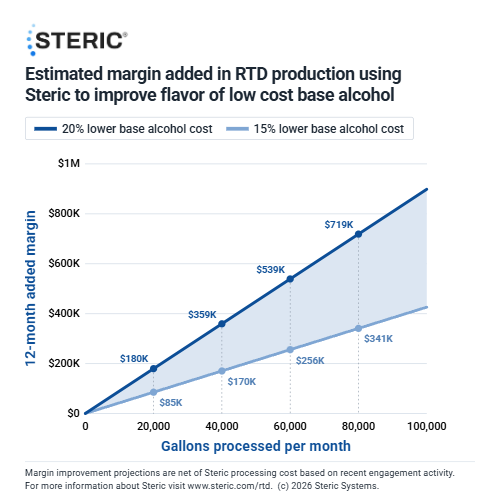
Steric Systems has created millions of dollars in value for beverage producers by addressing flavor problems that can leave valuable inventory off-spec or unsuitable for its intended use. For RTD producers, co-packers, and spirits suppliers serving the RTD market, that experience has a direct application: improving the alcohol going into a cocktail and addressing off-notes in finished batches. Both can affect the profitability of a production run.
A base alcohol may meet its analytical specification yet carry harsh, solvent, or grain notes that come through in the finished drink. Those notes can be particularly noticeable in lightly flavored RTDs. Producers may have to purchase a more expensive source, add corrective processing, or adjust the formulation to meet the customer’s flavor requirements.
Steric’s electromagnetic treatment reduces off-notes in GNS and other base alcohols before blending. That gives producers and their suppliers a way to evaluate lower-cost alcohol against the flavor specification they need to meet.
The company’s work also extends to batches where a flavor problem has already put inventory at risk. Its experience includes treating geosmin-tainted spirits, where an earthy or musty note can make the spirit unsuitable for its intended product. Recovering value from those batches has been a significant part of Steric’s work with spirits producers.
“Better base alcohol and recovered batches can make a real difference to a producer’s bottom line,” said Bill Fay, CEO of Steric Systems. “Our history of elevating flavor profiles for top global brands provides essential reference points for RTD formulators and co-packers.”
For co-packers, treating incoming alcohol can also help manage sensory differences between suppliers and lots. A sourcing change that introduces a different flavor profile can require additional formulation work, even when the replacement alcohol otherwise meets purchasing requirements.
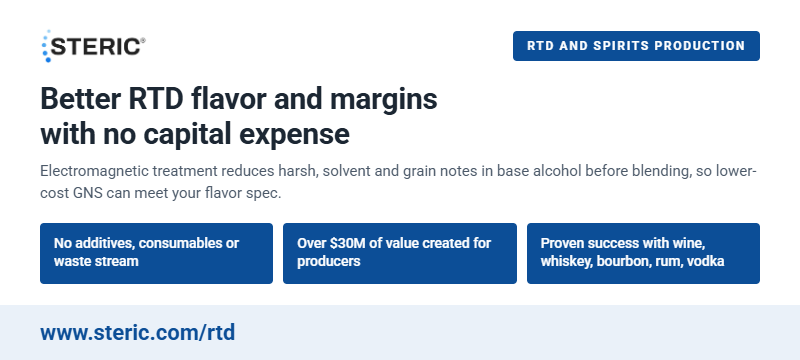
Steric applies a controlled electromagnetic field to liquid as it passes through the system. Treatment uses no additives, consumables, or filtration media and generates no waste stream. The system fits into existing transfer and blending steps and can treat both ingredients and finished beverages.
Steric’s technology has been in commercial use since 2023, has independent chemistry validation from the University of Southern California, and received the Distilled Spirits Council’s (DISCUS) Innovation of the Year Award.
Producers can contact Steric to arrange an evaluation of their base alcohol or finished beverage. Trials establish the sensory result and allow clients to compare treatment costs with potential ingredient savings or the value of recovered product.
For More Information:
More RTD & Spirits Info from Steric